The Complete Export Documentation Guide for Indian Manufacturers (2026)
The Complete Export Documentation Guide for Indian Manufacturers (2026)
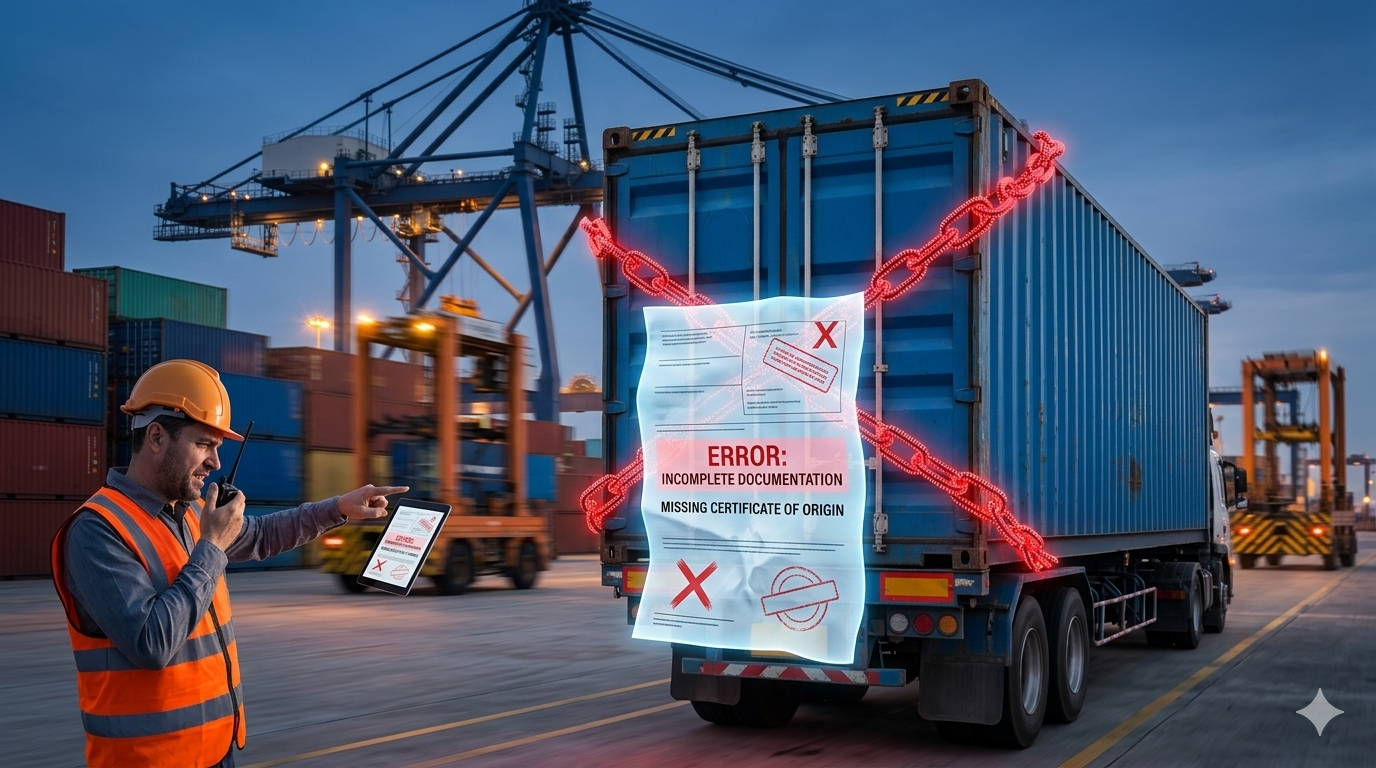
One documentation mistake can stop an entire export shipment — even after production, stuffing, and freight booking are complete. In today’s global trade environment, customs authorities, banks, and import regulators are enforcing stricter compliance checks than ever before. A mismatch in HS Codes, consignee details, invoice values, or certificates can lead to shipment holds, demurrage, LC payment delays, and even penalties. For Indian manufacturers exporting to the USA, Europe, Middle East, and ASEAN countries, documentation accuracy has now become a critical part of supply chain execution.
The foundation of every export shipment starts with four key documents: the Commercial Invoice, Packing List, Shipping Bill, and Bill of Lading. These documents must match perfectly across product descriptions, weights, quantities, Incoterms, and consignee information. Exporters should also understand when to use a negotiable Bill of Lading versus a Sea Waybill, especially for LC-based or high-value transactions. In parallel, compliance documents such as IEC, RCMC, RoDTEP registrations, and Certificates of Origin play a major role in customs clearance and FTA duty benefits.
One of the most ignored risk areas in Indian exports is SCOMET and dual-use product compliance. Many engineering goods, electronics, machinery components, chemicals, and advanced industrial materials may require additional licensing under DGFT regulations. At the same time, destination-specific certificates like CE, SABER, Halal, Phytosanitary, and MSDS documentation are becoming mandatory depending on the country and product category. Exporters that prepare these requirements before production and shipment planning avoid the majority of customs and buyer-side issues.
Key Things Every Indian Exporter Should Verify Before Shipment
- Commercial Invoice matches Packing List and BL exactly
- Correct HS Codes and Incoterms are declared
- IEC, RCMC, and DGFT registrations are active
- Certificate of Origin eligibility checked for FTA benefits
- SCOMET applicability verified for engineering/technical products
- Destination-specific certificates arranged in advance
- LC documentation requirements reviewed carefully
- Shipping Bill filed correctly before cargo gating
At Exim Transtrade India, we help Indian manufacturers simplify global exports through end-to-end freight forwarding, export documentation support, customs coordination, DGFT-related guidance, buyer-country compliance assistance, and multimodal logistics execution across the USA, Europe, Middle East, Africa, and Asia. From factory cargo movement to final destination delivery, our focus is to ensure shipments move faster, cleaner, and without documentation-related disruptions.
Important Official References & Compliance Sources
.png)
.png)
.png)