Global Container Trade & Supply Chain Resilience in 2026
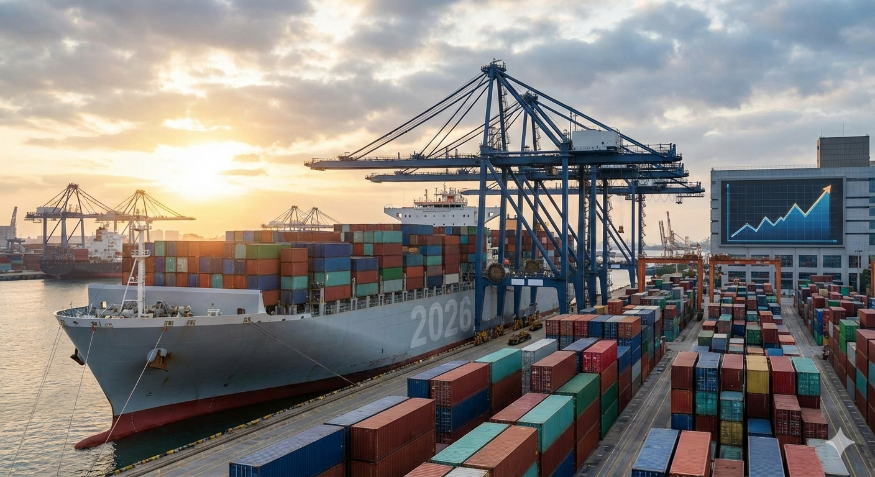
Growth, Oversupply, and the New Freight Reality Trade Growth Proves Resilience, Not Stability Despite geopolitical tensions, tariff shocks, and rerouted shipping lanes in 2024–25, global containerized trade continued to expand. Industry data shows container volumes still grew by approximately 3.5–4.2%, outperforming early pessimistic forecasts. This growth signals not stability, but resilience global trade adapts even when routes break and costs fluctuate. For shippers, this means demand hasn’t collapsed, but the rules of engagement have permanently changed.
Capacity Is Growing Faster Than Demand
Heading into 2026, a critical imbalance is forming. Forecasts indicate container demand growth of around 3%, while fleet capacity is set to expand closer to 3.6%, driven by new vessel deliveries ordered during the pandemic boom. This oversupply is already pushing freight rates downward, reversing the scarcity-driven pricing of recent years. The result is a shipper-favorable market, but one where volatility remains high and timing becomes everything.
Why Resilience Now Depends on Commercial Strategy
This capacity demand gap creates pressure across the supply chain. Carriers face margin compression, while shippers gain leverage but only if they act strategically. Forward-looking companies are locking in flexible, multi-year contracts, diversifying routing options, and shifting toward nearshoring or multi-country sourcing to reduce risk. Technology plays a key role: control towers, real-time visibility platforms, and predictive analytics allow logistics leaders to respond before disruption becomes delay. In 2026, resilience is no longer operational it’s commercial.
How Exim Transtrade Helps You Win in a Volatile Market
Exim Transtrade helps businesses turn market imbalance into advantage. By combining freight market intelligence, index-linked pricing strategies, diversified carrier access, and risk-mapped routing, we help clients secure competitive rates without sacrificing reliability. Our approach ensures you’re not reacting to falling rates or sudden disruptions you’re positioning your supply chain to stay profitable, predictable, and scalable in an oversupplied, high-volatility freight market.
Market intelligence + resilient logistics design = sustained growth in 2026 and beyond.
Key References & Evidence Sources
Global container trade performance & 2026 outlook
https://vizionapi.com/blog/global-container-trade-2025-performance-review-and-2026-forecasts
Understanding container freight indices & pricing signals
https://mykn.kuehne-nagel.com/news/article/understanding-global-container-freight
Supply chain disruption & resilience trends toward 2026
https://www.slimstock.com/blog/supply-chain-trends-2026/
Nearshoring and supply chain redesign trends (KPMG insights)
#GlobalTrade #ContainerShipping #SupplyChainResilience #FreightRates2026 #LogisticsInsights
#OceanFreight #EximTranstrade

.png)
