Why India's Best Exporters Choose Experienced Freight Forwarders Over Digital Platforms in 2026
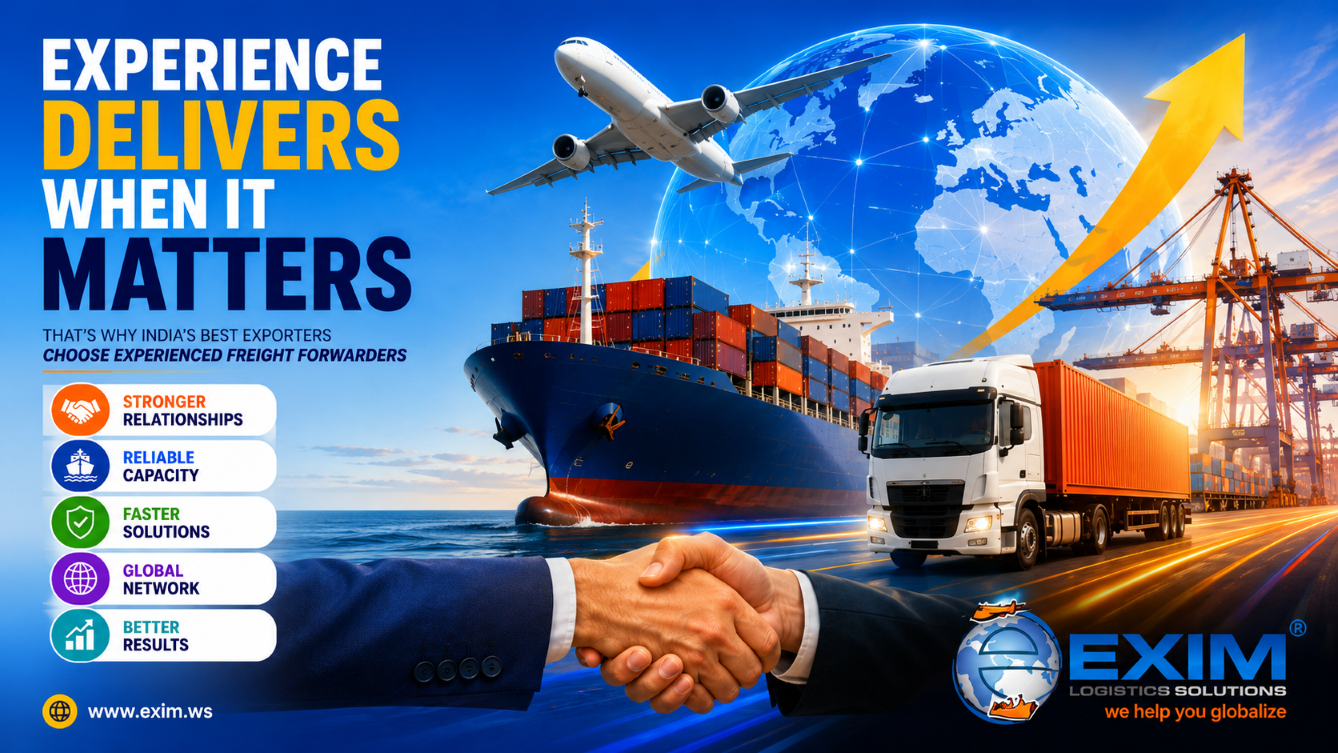
Why India's Best Exporters Choose Experienced Freight Forwarders Over Digital Platforms in 2026
Digital freight platforms have changed how exporters discover rates, book shipments, and track cargo. For standard shipments on high-volume lanes, they work well. However, for shipments that go wrong — held at customs, delayed by carriers, or caught in a geopolitical disruption — the exporters who come through best are not necessarily the ones with the best app. They are the ones with the best relationships.
2026 made this distinction impossible to ignore. India’s ports handled record cargo volumes even as exporters faced the first simultaneous disruption of the Red Sea and the Strait of Hormuz in modern shipping history. Rates spiked within months; container availability tightened overnight. Exporters who had built their process around a booking screen had no one to call. Exporters working with an experienced forwarder did. This is not an argument against technology — it is an honest look at where platforms excel, where experience is irreplaceable, and why the exporters growing fastest in 2026 use both, with a forwarder in the driver’s seat.
1. What Digital Freight Platforms Do Well
A fair comparison starts by giving digital platforms their due. A good freight forwarder should use the same technology — not compete with it.
<!-- [if !supportLists]-->• <!--[endif]-->Rate transparency on standard trade lanes: for commoditised lanes — China–India, India–Europe, intra-Asia — platforms give fast, comparable rate visibility that once took days of calls.
<!-- [if !supportLists]-->• <!--[endif]-->Booking speed for general cargo: a standard FCL booking on a well-served route can be confirmed in minutes rather than hours.
<!-- [if !supportLists]-->• <!--[endif]-->Visibility, tracking, and documentation: real-time tracking, automated status updates, e-BLs, and digital invoices have become baseline expectations — and rightly so.
<!-- [if !supportLists]-->• <!--[endif]-->Where they are genuinely useful: regular, high-volume, standard cargo on established routes, shipped by exporters who rarely encounter exceptions.
If that describes your entire shipment profile, a platform alone may serve you well. The problem is that almost no exporter’s profile stays that simple for long.
2. The Moments That Reveal the Difference — When Experience Matters Most
Every exporter eventually has a shipment that does not behave. That is when a platform’s limitations become expensive.
<!-- [if !supportLists]-->• <!--[endif]-->Customs examination: what moves a flagged shipment fastest is not a support ticket — it’s a call to an officer who already knows your forwarder. A platform can show status; it cannot expedite the outcome.
<!-- [if !supportLists]-->• <!--[endif]-->Carrier space crunch: during the 2025–26 disruption period, carriers blank-sailed routes and tightened equipment. Exporters on pure spot-market booking competed for whatever space was left; those with pre-negotiated allocation got loaded anyway.
<!-- [if !supportLists]-->• <!--[endif]-->Geopolitical disruption: when the Red Sea and Strait of Hormuz were disrupted simultaneously this year, exporters needed rerouting decisions in hours, not after an algorithm caught up. India’s ports still handled a record 915 million tonnes of cargo in FY 2025–26, but the disruption left exporters absorbing higher costs through carriers that control over 90% of the country’s trade. A forwarder with pre-positioned alternative routing moved cargo while others waited.
<!-- [if !supportLists]-->• <!--[endif]-->A documentary crisis at 11pm before sailing, or ODC/hazmat/pharma cargo: these need a phone call and a human who has done it before — not a ticket number or a booking dropdown.
3. The 5 Situations Where Experienced Freight Forwarders Save Exporters More Than They Cost
Forwarder fees are sometimes viewed as overhead. In these five situations, they are insurance that pays for itself.
<!-- [if !supportLists]-->1. <!--[endif]-->Customs examination with a short vessel window. A shipment is flagged with the vessel sailing in 48 hours. A relationship at that customs station can resolve it fast enough to still catch the sailing — missing it can mean a week’s delay.
<!-- [if !supportLists]-->2. <!--[endif]-->Carrier equipment shortage at origin during monsoon. A forwarder with allocated space and strong yard relationships can source equipment when the spot market has none.
<!-- [if !supportLists]-->3. <!--[endif]-->LC discrepancy discovered 48 hours before the presentation deadline. A team that has seen the exact discrepancy before can resolve it same day, rather than holding up payment for weeks.
<!-- [if !supportLists]-->4. <!--[endif]-->Buyer requests a routing change after the booking is confirmed. Multi-carrier relationships allow rebooking onto an alternative service without cancellation penalties eating the margin.
<!-- [if !supportLists]-->5. <!--[endif]-->New market entry — destination compliance unknown. An established destination agent network already knows what that country’s customs will ask for, before the cargo arrives and gets stuck finding out the hard way.
4. What 30+ Years of Relationships Actually Means
“Relationships” can sound vague. In practice, it means specific things that move a shipment when something goes wrong.
<!-- [if !supportLists]-->• <!--[endif]-->Customs and port relationships: when an examination notice lands, the first call goes to someone who already knows the forwarder — not a generic helpdesk. The same relationships secure ODC pre-clearance and priority berth scheduling.
<!-- [if !supportLists]-->• <!--[endif]-->Shipping line space allocation: long-standing forwarders typically hold negotiated space commitments, giving clients access to capacity before it reaches the spot market — the advantage that mattered most during 2026’s space crunches.
<!-- [if !supportLists]-->• <!--[endif]-->Destination agent network and industry membership: pre-vetted partner agents move cargo through destination customs with far fewer surprises, while affiliation with IATA, FIATA, and FFFAI signals recognised standards of conduct and liability that a platform-only operator lacks.
<!-- [if !supportLists]-->• <!--[endif]-->In India specifically, the floor for legitimacy is regulatory: a customs broker must be CBIC-licensed under the Customs Brokers Licensing Regulations, 2018, requiring a professional qualification or two years of G-card experience, the NACIN examination, and a security deposit. That license is the baseline. Thirty years of relationships built on top of it is what moves a shipment when it matters.
5. Why Technology and Experience Are Not Opposites
None of this argues against using technology — it argues against using technology instead of an experienced partner.
<!-- [if !supportLists]-->• <!--[endif]-->Exim Transtrade combines digital tracking with human expertise: we use digital tools for tracking, documentation, and rate visibility, and our people for judgement calls, relationship-based escalation, and contingency planning.
<!-- [if !supportLists]-->• <!--[endif]-->Our client portal: the same real-time tracking transparency you’d expect from a platform, without losing a dedicated point of contact who picks up the phone.
<!-- [if !supportLists]-->• <!--[endif]-->Technology to be faster, not to replace judgement: automation handles repeatable tasks so our team has more time for decisions that need a human — which carrier to call, which route to pivot to.
The exporters thriving in 2026 are not choosing between a platform and a forwarder. They are using a forwarder who uses the platform’s tools — with someone accountable on the other end of the phone.
6. How to Evaluate Your Freight Forwarder: 7 Questions to Ask
Before committing to any forwarder — digital-first or relationship-led — ask these seven questions.
|
Q1 |
Are you licensed with CBIC as a Customs Broker? Verify on the CBLMS portal — non-negotiable in India. |
|
Q2 |
What is your experience on my specific trade lane? General experience isn’t the same as deep experience on your exact corridor. |
|
Q3 |
Who is my dedicated account manager? “Our support team” means a platform wearing a forwarder’s branding. |
|
Q4 |
What is your protocol when a shipment is held at customs? A real answer names an escalation process, not a ticketing system. |
|
Q5 |
Do you have allocated space on my primary carriers? This reveals priority access during the next capacity crunch. |
|
Q6 |
What does your pre-shipment documentation review look like? Catching an LC discrepancy before sailing is far cheaper than after. |
|
Q7 |
Can I speak to three reference clients in my industry? A confident forwarder connects you directly. |
Conclusion
Digital freight platforms have earned their place — for shipments that go exactly to plan. But trade rarely stays that cooperative, and 2026 has proven it: record port volumes, a shock at two major maritime chokepoints simultaneously, and freight costs moving faster than any algorithm could process. The exporters who came through it best could call someone who already knew their shipment, their customs station, and their carrier — and could act in hours, not days.
The right freight forwarder does not just move your cargo. They protect your business when it matters most. With over 30 years of freight forwarding experience, deep carrier and customs relationships, and the digital tools to keep you informed, Exim Transtrade is built for exactly those moments.
Book a free consultation-No Obligation. Just Expertise

.png)
