New US Customs Rules: What They Actually Mean for Indian Exporters
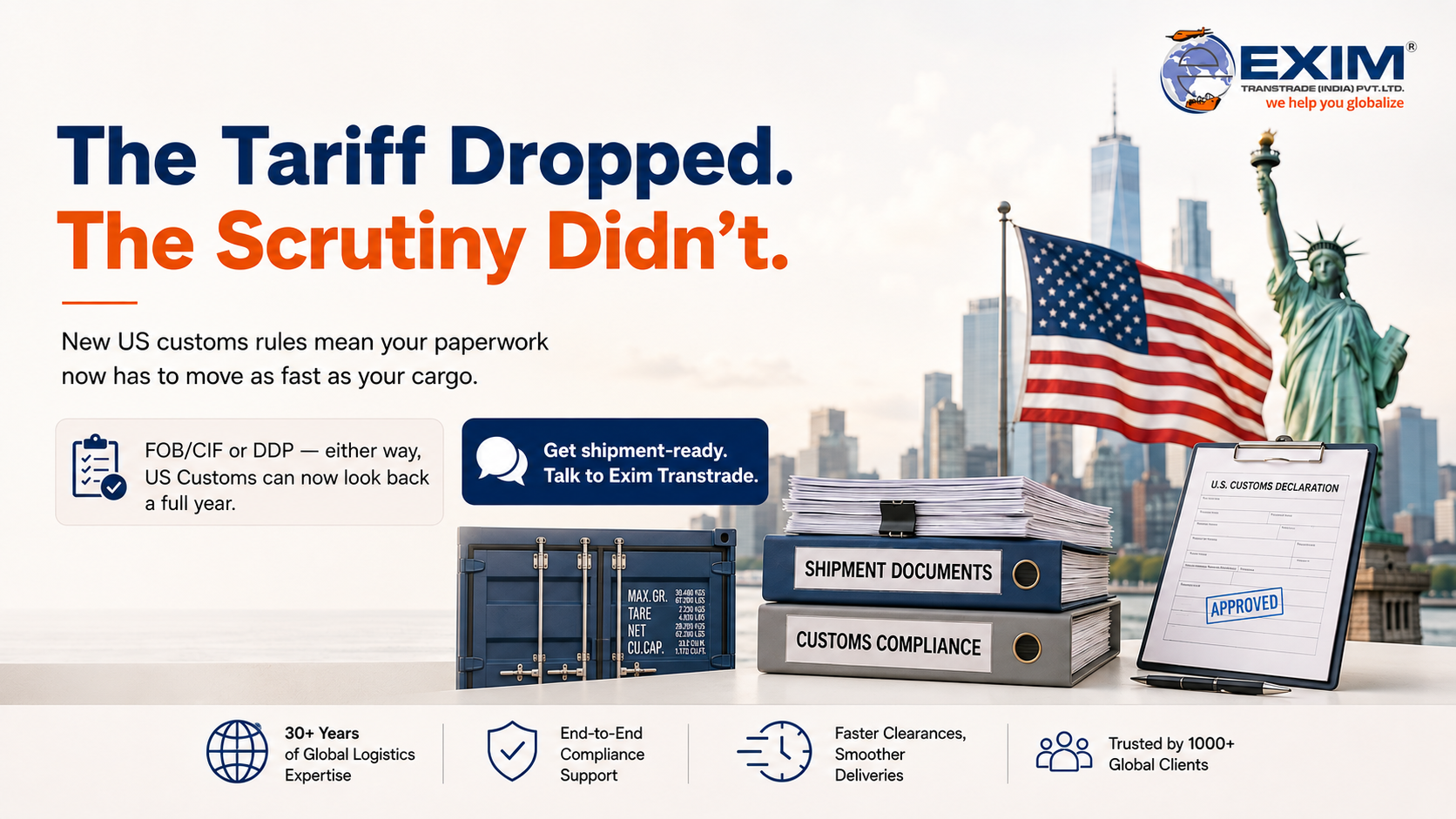
New US Customs Rules: What They Actually Mean for Indian Exporters
Indian exporters could be forgiven for feeling like the ground keeps shifting under US trade. But the latest change isn't about tariffs at all. Duties on Indian goods currently sit well below where they were a year ago. What's changed is the standard of proof exporters and their US buyers must meet and how quickly they must meet it.
Two developments are behind this. In June 2026, a US Executive Order rewrote the rules for anyone acting as "Importer of Record" - the party legally on the hook for a shipment at the US border. And in August 2026, a separate government report placed India on its list of countries considered highest-risk for transshipment: goods routed through a third country to disguise their true origin and dodge tariffs. Neither move targets genuine Indian manufacturers directly. Both raise the burden of proof on them anyway.
It depends on who's clearing customs
If you sell FOB or CIF, your US buyer or their broker is the Importer of Record, not you. That hasn't changed. What has changed is that the buyer now needs to show far more to US Customs and most of that evidence has to come from you: certificates of origin, manufacturing and bill-of-materials records, shipping bills, Indian customs filings. Buyers who now carry personal liability for a shaky import will simply gravitate toward suppliers who can produce this paperwork in hours, not days.
If you ship DDP, or sell direct through your own website or a US marketplace, you're likely the Importer of Record yourself. That's the harder scenario. The quick, low-value "informal entry" route many small-parcel exporters relied on is gone. Every shipment now needs a full formal entry, security certification, adequate bonding, and demonstrable financial footing in the US. This is a structural shift, not a documentation exercise, and it's arriving inside a compliance window of roughly 90 to 180 days.
The part that touches everyone: transshipment
Because India now sits in the highest-risk tier, any shipment where the "genuinely made in India" story isn't airtight can be pulled aside, regardless of who signs as Importer of Record. And US Customs can now look back a full year and reopen shipments retroactively. A gap in your records today can become an expensive problem twelve months from now, for a shipment you'd already filed away as closed.
Why this catches so many exporters off guard
Most exporters manage this documentation across email threads, WhatsApp, spreadsheets and paper files spread across production, quality, logistics and finance. That's manageable until someone asks a specific question on a tight deadline, which is now happening far more often, and to genuine manufacturers as much as anyone else.
Where we come in
This is the exact ground Exim Transtrade has operated on for over two decades — customs broking, freight forwarding, and end-to-end documentation across 150+ countries. We help exporters turn "we make it here" into a paper trail that holds up when a buyer or a CBP officer asks the hard question, so a compliance check becomes a formality instead of a scramble.
If you sell FOB/CIF, DDP, or direct to US customers, now is the time to get your documentation audit-ready — not after a shipment is held at port.
Talk to the Exim Transtrade team about getting shipment-ready for the new US customs regime.
Source reference (for internal use, not for publication): ITLN, "What new US customs rules mean for Indian exporters" and "Why India's logistics future depends on digital visibility."

.png)
